

Remote work can give you more control over when and where you work. But having that freedom doesn’t automatically mean you have more time for yourself.
It starts small. A message you answer after dinner because it’ll only take a second. Lunch that slides from twelve to two because you were mid-task. A day off where you tell yourself you’re just checking one thing, and forty minutes later you’ve finished the whole task. None of it feels like a big deal at the moment.
The trouble is what happens after a few months of “just this once,” when the exception has become the routine, and you can’t remember the last time you closed the laptop and meant it. Protecting that balance starts with something basic: knowing when your working day is supposed to end.
Establish Clear Working Boundaries
One of the biggest advantages of remote work is having more say in how your working day fits around your life. Some people do their best thinking at six in the morning. Others can’t function before ten and hit their stride at nine at night. Plenty of jobs now let people build a schedule around school pickups, gym classes, or a five-hour time difference with the rest of the team.
The problem is that this only works if the day still has an edge to it. In an office, you leave, and that’s the signal: work is done. At home, the laptop’s still sitting there. There’s no door to walk out of. So one email turns into checking two more, and somehow it’s nine at night before you notice. A decent work life balance doesn’t need you clocking off at the exact same minute every day. Busy weeks happen. What matters is whether the late night is the exception, or whether it’s becoming what a normal Tuesday looks like now.

Weekends run into the same trap. Remote work loosens up the idea of a traditional weekend, which is fine, until “loosened up” becomes “doesn’t really exist.” There still needs to be real, unscheduled time where work isn’t even a background thought.
Stop Treating "Always Available" as a Virtue
Somewhere along the way, being quick to reply became a personality trait people are proud of. It shouldn’t be. Remote work runs on email, chat, project tools, and calls, and most of the time it’s more than one of those going at once.
This isn’t just a remote work issue. According to Microsoft’s Work Trend Index analysis, meetings starting after 8 p.m. increased by 16% year over year, reflecting how work can extend beyond traditional hours, particularly across time zones. Being available when something genuinely needs attention is one thing. Feeling expected to respond at all hours is another.
Not everything needs an answer in the next five minutes. What actually helps is knowing, clearly, when you’re expected to be reachable, what genuinely counts as urgent, and what can sit until tomorrow without the world ending.
There’s a difference between being dependable and being permanently switched on. The first one’s a good thing to be known for. The second one just means you never really left work.

Build a Day With Room to Actually Think
Protecting your time off starts with what happens during the day, not just after it. In a survey by Eagle Hill Consulting, 61% of fully remote employees in the United States reported experiencing burnout, compared with 57% of hybrid employees. The findings don’t mean remote work causes burnout, but they reinforce why manageable workloads and clear expectations matter, regardless of where people work.
Working from home doesn’t remove distractions, it just swaps them out. The office chatter is gone, replaced by notifications, back-to-back calls, and someone asking where the delivery van is. It’s entirely possible to be “busy” for eight straight hours and never once get a proper run at the thing that needed real thought.
One advantage of remote work is the opportunity to plan focused work around the hours when you’re most productive, provided your role and team expectations allow it. Closing the laptop lid on your inbox for an hour does more than any productivity hack. So does treating a chunk of the day as genuinely off-limits, not “I’ll probably be quick if someone messages,” but closed.
Breaks deserve the same honesty. Eating lunch one-handed while replying to Slack isn’t a break, it’s just work with a sandwich involved. Stepping outside for twenty minutes with your

Don't Let Independence Turn Into Isolation
Remote work opens up a lot: no commute, easier international projects, a real say in where you live. But the day-to-day can shrink in a way that’s easy to miss. Work happens at home. Meetings happen through a screen. Whole days can pass without a proper conversation that isn’t about a deliverable. For people who value regular social interaction, that can make working remotely feel isolating, even when they enjoy the independence. A healthy work-life balance isn’t just about working hours; it’s also about maintaining relationships and interests outside the job.
Some people are genuinely fine with that. Others notice, months later, that they haven’t had a real conversation with a colleague in weeks, and can’t quite place when that started. Coworking spaces, industry meetups, a five-a-side game, a book club, anything that isn’t a screen counts. It doesn’t need to be work-related to help.
Professional connection specifically is worth protecting too. In an office, you pick up information and relationships just by being nearby. Remote work can reduce those spontaneous interactions, particularly for people who rarely meet their colleagues in person. Creating opportunities to connect becomes more important.
That matters even more for anyone who’s moved abroad to do this. Bangkok, Chiang Mai, Da Nang, Kuala Lumpur, Bali: none of them hand you a community just for showing up. The location’s an opportunity. Building an actual life there is still on you.
Moving Abroad Doesn't Fix Your Work-Life Balance by Itself
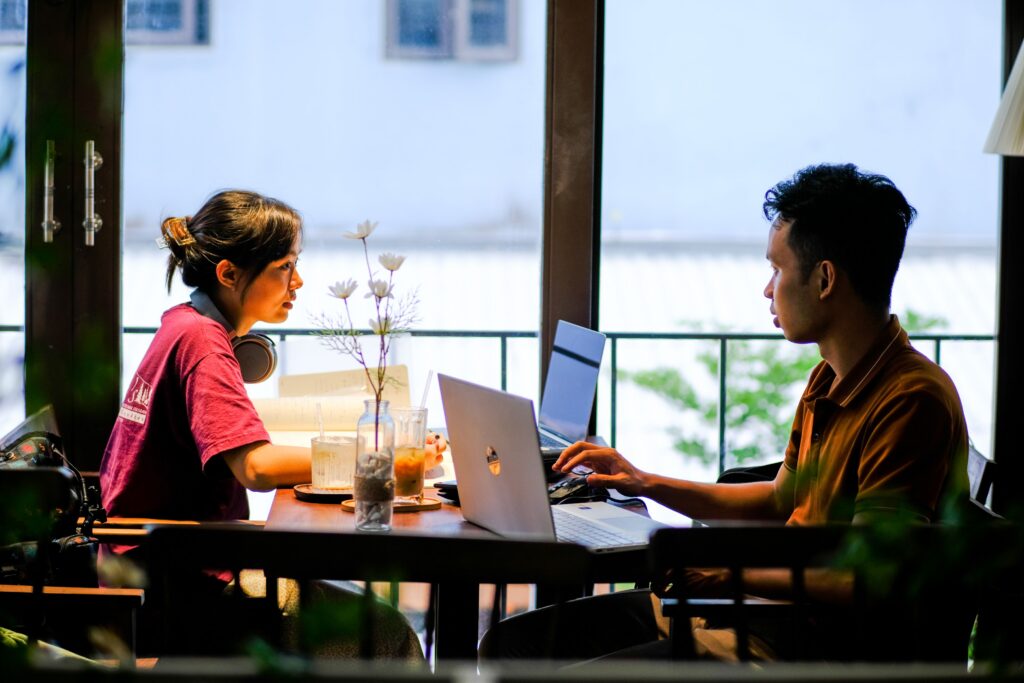
Working remotely from another country is one of the best perks flexibility offers. New culture, new people, a life that would’ve been impossible to build around a fixed office. But a new view out the window doesn’t automatically fix anything.
You can move somewhere genuinely exciting and still spend most of your day inside an apartment, working around a call schedule that makes no sense for the time zone you’re in. Whether a location works for you long term depends on more than the destination. Reliable internet, access to a suitable workspace, time-zone differences, and clear expectations with your team or clients all make a difference.
The life outside work matters just as much as the job does. There’s not much point moving somewhere for more freedom if the schedule leaves no room to be there. And there’s a practical side worth being honest about: visas, tax residency, and work authorisation vary by country and by person, so check the current official guidance or talk to someone qualified rather than assuming it’ll sort itself out.
Know the Warning Signs Before Burnout Sets In
A demanding week doesn’t necessarily mean your remote-work routine is unsustainable. The concern is when longer hours, constant interruptions, or difficulty disconnecting continue well beyond that busy period.
Work starts a little earlier. Ends a little later. Lunch stops happening at a consistent time. Messages get checked at ten at night without really deciding to. A day off ends up with “just a couple of quick things” on it anyway. Being offline for a few hours starts to feel wrong, even when nothing’s on fire.
When these patterns continue, it’s worth looking beyond personal habits and examining how the work itself is organised. Is the workload realistic? Did anyone ever agree on when you’re supposed to be reachable? Are there too many time zones stacked on top of each other? Has the routine stopped fitting how you work, months after it stopped fitting and nobody adjusted it?
Remote work offers room to make adjustments, whether that means discussing availability with your team, changing your workspace, or finding a schedule that better supports your responsibilities. Not every issue can be solved individually, but recognising what needs to change is a useful starting point.
The Setup Matters More Than the Location
Remote work offers something valuable: more freedom to decide how work fits into your life. Making the most of that freedom means knowing when you’re working, when you’re reachable, and when it’s time to switch off.
It also means having the right support around you, whether that’s a productive workspace, opportunities to connect with other professionals, or enough flexibility to enjoy the place where you live.
For anyone doing this from abroad, the same idea holds. The place should support the job, not the other way round, and there’s not much point moving somewhere for freedom if the job never lets you use it.
At Iglu, flexibility is part of how we work. Our network brings together digital professionals working remotely, with access to professional communities and workspaces in locations including Thailand and Vietnam. For those looking for remote opportunities that fit their professional and personal goals, explore our current openings.
Frequently Asked Questions
How do I stop work from creeping into my evenings when I work remotely?
Set a clear, consistent stopping point and treat it as seriously as a meeting. A physical signal, closing the laptop, leaving the workspace, helps mark the shift from work mode to personal time, since there’s no commute to do that automatically.
Is it normal to feel isolated working remotely?
Yes. Remote work removes some of the incidental social contact an office provides by default, and that gap can build into real isolation over time, even for people who enjoy independent work. Deliberately building connections outside the immediate team, through coworking spaces, communities, or regular non-work social contact, helps offset this.
How do I know if my remote work setup isn’t sustainable anymore?
Watch for temporary habits becoming permanent: earlier starts, later finishes, checking messages on days off, or discomfort at being offline for a few hours. A demanding week isn’t a red flag. A demanding week that never ends is.